Classic Easter: A Font That Captures Spring's Joyful Energy
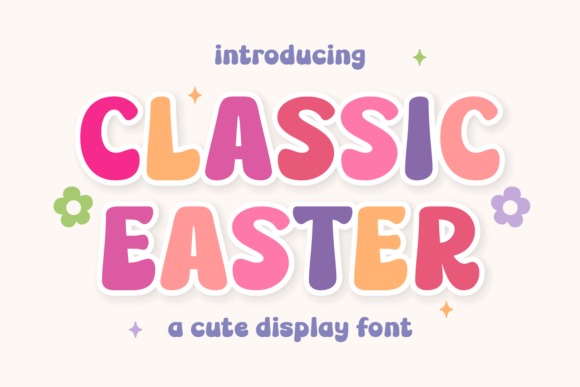
There's a particular feeling that comes with the first warm days of spring—that sense of renewal, playfulness, and bright optimism. If you've ever tried to capture that energy in a design project, you know how tricky it can be to find a typeface that doesn't feel forced or overly childish. Classic Easter is a display font that manages to walk that line beautifully. It's not trying to be everything to everyone. Instead, it leans fully into its personality: soft, bulbous letterforms with a friendly, bouncy rhythm that feels genuinely joyful without tipping into cartoonish territory.
What makes this typeface stand out in a crowded market of seasonal and playful fonts is its "interlocking" quality. The letters seem to nestle together, creating a cohesive visual flow that works especially well when you're setting short headlines, event titles, or brand names. The rounded terminals and generous proportions give each character a welcoming, approachable feel. It's the kind of font that makes people smile before they've even read the words—and in marketing, that emotional response is worth its weight in gold.
Where Classic Easter Truly Shines
Let's get practical. You're probably wondering where this typeface actually earns its keep in real projects, not just in a specimen sheet. The short answer: anywhere you need to communicate warmth, celebration, and seasonal energy. But let's break that down.
For seasonal holiday branding, Classic Easter is a natural fit. Think about spring sale campaigns, Easter brunch promotions, or floral shop branding during the months of March and April. The font's personality aligns perfectly with the visual language of the season—pastel palettes, blooming flowers, and that sense of fresh starts. If you're designing a logo or wordmark for a seasonal event, this typeface gives you an instant mood without requiring much supporting design work.
Greeting cards are another sweet spot. Whether you're a stationery designer selling on Etsy or a publisher producing a holiday card line, Classic Easter brings a hand-crafted, celebratory quality that resonates with buyers. It pairs well with watercolor illustrations, simple botanical line art, or even minimalist layouts where the typography does all the heavy lifting. The key is to let the font breathe—give it generous spacing and avoid cramming too much text into a small area.
For children's apparel graphics, this typeface offers a playful yet polished alternative to the overly simplistic fonts that dominate the kids' market. It has enough character to feel special on a t-shirt or onesie design, but it's still legible at various sizes. If you're a small business owner creating branded merchandise for a children's boutique or a kids' event, Classic Easter can become a recognizable part of your visual identity.
Festive social media content rounds out the primary use cases. Instagram stories, Facebook event headers, Pinterest pins for spring recipes or DIY projects—these are all environments where a display font with personality can stop the scroll. Classic Easter works particularly well in multi-color palettes, which is a significant advantage for social media design where visual impact needs to happen fast. Try setting the font in alternating pastel shades or pairing it with a bold accent color for maximum engagement.
How This Typeface Influences Your Design Outcomes
Choosing a font isn't just an aesthetic decision—it shapes how your audience perceives your brand and how they interact with your content. Classic Easter influences several key areas of design performance.
Brand perception and emotional tone. When someone encounters this typeface in your materials, they immediately register a mood: friendly, festive, approachable, and seasonal. For businesses that want to position themselves as warm and community-oriented—think local bakeries, family-oriented event planners, or artisan craft brands—this perception is invaluable. It signals that your brand doesn't take itself too seriously, but still cares about quality and presentation.
Visual hierarchy and readability. As a display font, Classic Easter is designed for headlines and short-form text, not body copy. Understanding this distinction is critical. Use it for your H1 headings, hero text on landing pages, or the main title on a poster. Pair it with a clean serif font or a simple sans serif font for supporting text. This contrast creates a clear hierarchy that guides the reader's eye and keeps your layout organized. Trying to set paragraphs in a display typeface like this would compromise readability and undermine the design's professionalism.
Consistency across touchpoints. One of the most practical advantages of using a well-designed premium font like Classic Easter is the ability to maintain brand consistency. From your website headers to your printed packaging to your social media graphics, using the same typeface across multiple channels reinforces recognition. Over time, your audience begins to associate that bouncy, joyful lettering with your brand specifically—and that's the foundation of strong brand identity.
Practical Guidance for Working with Classic Easter
Before you commit to any creative font for a project, it's worth running through a quick evaluation process. Here's how I'd approach it with Classic Easter.
Test it in context. Don't just look at the font in isolation on a white background. Drop it into your actual design mockup. Set your headline, add your color palette, and see how it interacts with your imagery. A typeface that looks charming in a specimen sheet might feel overwhelming next to busy photography, or it might perfectly complement a clean, illustrated style. You won't know until you test it in the real environment.
Explore font pairing options. Classic Easter pairs best with typefaces that play a supporting role. A geometric sans serif font gives it a modern, clean contrast. A traditional serif font can ground it with a bit of editorial sophistication. Avoid pairing it with other decorative or script fonts—that combination tends to feel chaotic and reduces overall legibility. The goal is contrast, not competition.
Check the included styles and glyphs. Quality display fonts often come with alternate characters, ligatures, or extended language support. Take a few minutes to explore what's included. You might find an alternate ampersand or a stylistic set that gives your project a more refined or unique look. These details separate thoughtful typography design from generic font usage.
Consider your color strategy. Classic Easter was practically built for multi-color applications. If you're designing a logo, try setting individual letters in different coordinating shades. For packaging design or editorial layouts, use the font in a single bold color against a contrasting background. The generous, rounded forms hold up well visually even in vibrant or unconventional color choices.
Understand the licensing. If you're using Classic Easter for commercial projects—selling products, creating client work, or publishing content for a business—make sure the font license covers your intended use. Most premium font licenses distinguish between personal and commercial use, and some have specific terms for embedding in digital products or merchandise. A quick review of the licensing terms upfront saves headaches later and ensures you're building your brand identity on solid legal ground.
At the end of the day, the best typeface for your project is the one that serves your message and resonates with your audience. Classic Easter isn't trying to be a universal workhorse. It's a specialist—a joyful, seasonal, personality-driven display font that does one thing exceptionally well. If your project calls for warmth, celebration, and that unmistakable spring energy, it deserves a serious spot in your design toolkit.