Happy Doodle: Injecting Playful Energy into Your Designs
When you’re working on a project that demands a spark of joy, standard corporate typefaces often fall flat. You need something that feels alive, something that mimics the spontaneous energy of a sketch on a napkin. This is exactly where the Happy Doodle font shines. It isn't just a collection of letters; it is a curated set of hand-drawn icons and glyphs designed to bring a tactile, human element to your digital work. For designers, marketers, and content creators, finding a premium font that bridges the gap between professional polish and genuine whimsy is rare, but this typeface manages to do exactly that.
Understanding the Visual Character
At its core, Happy Doodle is a lively dingbat decorative typeface. Unlike a standard serif font or sans serif font that focuses on legibility for body copy, this typeface focuses on visual storytelling through symbols. The style is distinctly casual and whimsical, characterized by smooth lines that suggest a steady hand and a happy heart. You won’t find rigid geometry here; instead, the aesthetic relies on organic shapes that feel personal.
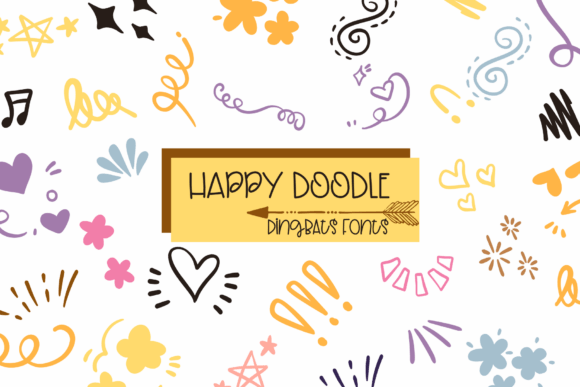
The library of icons is extensive. You will find hearts, stars, flowers, musical notes, swirls, and celebratory bursts. These aren't just clip-art images pasted into a file; they are vector-based glyphs accessible via your keyboard. This makes Happy Doodle an incredibly versatile design asset. Whether you are building a brand identity for a boutique bakery or designing social media graphics for a lifestyle coach, the visual language of this font communicates openness and approachability.
Strategic Applications for Modern Creators
For the modern creative professional, the utility of a font is defined by its application across various mediums. Happy Doodle excels in environments where engagement is the primary goal. In the realm of packaging design, for example, these icons can be used to highlight product features or add a decorative border that catches the eye on a crowded shelf. It transforms a standard box into an unboxing experience.
In web design and editorial design, the font serves as a fantastic tool for breaking up text-heavy pages. Instead of using a standard bullet point, a designer might use a Happy Doodle star or swirl to guide the reader's eye. This small detail significantly improves the user experience by adding rhythm to the layout. Furthermore, for logo design in the casual or artisanal sectors, these icons can serve as the perfect secondary mark or favicon, reinforcing the brand's playful personality without overwhelming the primary typography.
The Psychology of Playful Typography
Typography influences perception more than many realize. A rigid, geometric modern typography choice implies efficiency and seriousness, which suits a tech startup or a law firm. However, if your audience is looking for connection, creativity, or fun, that same rigidity can feel cold. Happy Doodle alters the psychological weight of your design. It signals to the viewer that the brand is approachable and that the content is meant to be enjoyed rather than just consumed.
This shift in perception is vital for audience engagement. When a user sees hand-drawn elements like the ones found in this creative font, it triggers a response associated with human touch and craftsmanship. It suggests that a real person is behind the screen, not just an algorithm. For entrepreneurs and small business owners, this subtle visual cue can be the difference between a user scrolling past and a user stopping to interact.
Practical Guide to Implementation
Adopting a new display font into your workflow requires a bit of strategy. While Happy Doodle is intuitive, getting the most out of it involves understanding how it interacts with other typefaces. A common pitfall in design is pairing two highly stylized fonts together, which creates visual chaos. Because Happy Doodle is so expressive, it pairs best with cleaner counterparts.
Consider pairing it with a sturdy sans serif font for your headers or a readable serif for your body copy. The contrast allows the doodles to pop without competing for attention. For instance, if you are creating a wedding invitation, you might use a script font for the names, but use Happy Doodle icons for the decorative flourishes around the border. This creates a balanced visual hierarchy where the text remains the focus, but the personality is driven by the icons.
Evaluating Fit and Licensing
Before integrating any commercial font into a client project, due diligence is required. First, evaluate the specific icons included. Does the set of doodles align with the project's theme? While a handwritten font style is universally appealing, a construction company might not find much use for musical notes and flowers. Review the character map to ensure the specific glyphs you need are present.
Second, consider the medium. If you are designing for large-format print, such as posters or banners, the smooth lines of Happy Doodle will scale beautifully. However, for very small text applications—like footnotes in a legal document—this font would be illegible. It is strictly an accent font. Finally, always verify the commercial font licensing. If you are using these assets for merchandise, print-on-demand products, or client logos, you need to ensure the license covers those specific use cases to protect your business and your client.
Consistency Across Platforms
One of the challenges in brand identity is maintaining consistency across different platforms. A brand might look great on a website but lose its charm on a printed flyer. Because Happy Doodle is a vector-based font file rather than rasterized images, it maintains its crispness everywhere. Whether you are typing these icons into a Canva template for social media graphics or importing them into Adobe Illustrator for high-end print work, the quality remains consistent. This reliability makes it a valuable asset in a designer's toolkit, ensuring that the "vibe" of the brand remains cohesive from screen to shelf.