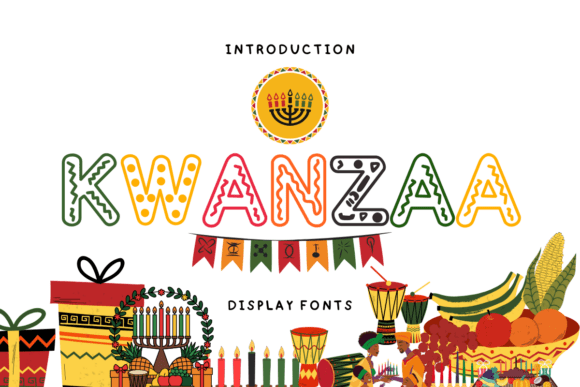
Kwanzaa: Capturing Celebration in Every Letterform
When you first encounter the Kwanzaa typeface, it’s less like viewing a standard premium font and more like examining a curated gallery of cultural art. This isn't just a set of letters; it is a display font that functions as a visual storyteller. In the world of modern typography, we often look for type that communicates a message before the reader even processes the word. Kwanzaa does exactly that. It immediately signals joy, heritage, and vibrancy through its intricate, hand-drawn aesthetic. For designers and creators, this offers a powerful shortcut to setting a specific emotional tone without needing extensive surrounding imagery.
Visual Language and Stylistic Nuance
The defining characteristic of this typeface is its decorative complexity. Unlike a clean sans serif font or a traditional serif font, Kwanzaa embraces ornamentation. Each capital letter is a distinct composition, featuring geometric patterns and motifs inspired by African heritage. The "multi-colored outline style" mentioned in its description is a key feature, offering a layered look that mimics the texture of fabric or traditional weaving.
However, it is vital to understand its classification. This is strictly a display font. Its personality is bold, festive, and culturally rich. The intricate details within the letterforms mean it is designed for impact at large scales. It shares some DNA with a handwritten font or script font in terms of its organic feel, but it stands apart due to its structured, geometric underpinnings. It brings a warmth that sterile, digital typography often lacks, making it a valuable asset for projects requiring a human touch.
Strategic Application: Where to Use Kwanzaa
The practical value of a creative font lies in its application. Because Kwanzaa is so visually dense, it requires context to shine. It is not suited for body text or long-form reading; the eye fatigue would be immediate. Instead, think of it as your headline specialist.
For brand identity, Kwanzaa is an excellent choice for organizations deeply rooted in community, culture, or education. A non-profit focusing on African history or a community center organizing cultural festivals could use this font for their logo or event headers to instantly communicate their mission. In packaging design, imagine this typeface on a specialty food item or a heritage craft box. It suggests artisanal quality and celebration, differentiating the product from mass-market competitors that rely on standard sans serif typography.
In the realm of publishing and editorial design, this font excels on book covers, particularly for children’s literature or anthology collections celebrating Black voices. It captures a sense of story and imagination. For web design, restraint is key. Use it for hero sections or "H1" headers on landing pages related to specific holidays like Kwanzaa, Juneteenth, or Black History Month. It works beautifully as a static image or a high-resolution header, but ensure it is optimized for load times if used as live text.
Mastering Font Pairing and Hierarchy
One of the biggest challenges with highly decorative fonts is finding balance. If your entire design screams for attention, nothing gets heard. The success of using the Kwanzaa font relies heavily on font pairing.
Because Kwanzaa is ornate and heavy, it demands a partner that is quiet and legible. A geometric sans serif font often works best. You want a typeface with plenty of "white space" in its design to counteract the density of the decorative letters. Avoid pairing it with another script font or a busy serif font, as this will create visual clutter. The goal is visual hierarchy: let Kwanzaa handle the emotion and the headline, and let a clean, neutral font handle the information and the details.
Technical Considerations and Professionalism
When integrating this font into your design assets, readability must be your north star. Even though the letters are individually beautiful, they must still form recognizable words. Test the font at the size you intend to use it. Sometimes, the intricate internal patterns can close up at smaller sizes, turning a word into a blur of color. If this happens, you are using it incorrectly—scale up or choose a different section of the project.
Furthermore, check the licensing. If you are a small business owner using this for social media graphics or merchandise, ensure your license covers commercial use. Most premium font licenses distinguish between personal projects (like a birthday card) and commercial work (like selling t-shirts). Respecting these boundaries is part of maintaining a professional workflow.
Conclusion: More Than Just a Font
Ultimately, the Kwanzaa typeface is a celebration of culture rendered in vector art. It bridges the gap between modern typography and traditional symbolism. For the designer, it is a tool to add instant depth and meaning. For the business owner, it is a way to connect with an audience on an emotional level. By respecting its visual weight, pairing it wisely, and applying it to the right contexts—from logo design to holiday greeting cards—you can leverage this font to create designs that are not only seen but felt.