Sketcha: The Marker-Textured Creative Font
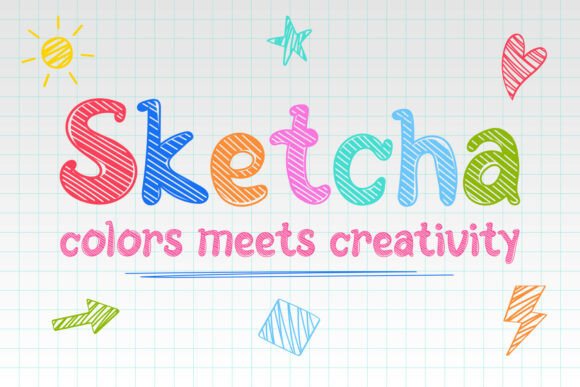
In a digital landscape often dominated by clean vectors and perfect geometry, there's a growing hunger for authenticity. We crave designs that feel human, spontaneous, and full of energy. This is precisely where Sketcha finds its power. It’s not just a typeface; it’s a texture, a mood, and an invitation to play. Designed to mimic the bold, immediate mark of a thick marker or pencil, Sketcha brings a raw, hand-crafted vibe to any project it touches. Its chunky, rounded letterforms are filled with a visible cross-hatch or scribble pattern, creating a depth that flat fonts simply can't achieve.
Where Does Sketcha Truly Shine?
Think of Sketcha as your go-to display font for moments that need a jolt of personality. It’s built for impact, not for body text. Its inherent energy makes it a standout choice for specific applications where fun and creativity are the goals.
- Children's Branding & Education: From toy packaging to school project headers, the playful, imperfect lines feel approachable and exciting for a younger audience. It instantly communicates fun.
- Crafting & DIY Projects: If you're designing labels for homemade goods, templates for scrapbooking, or headers for a crafting blog, Sketcha provides that authentic, handmade look without the actual labor.
- Vibrant Advertising & Social Media: Need a headline that stops the scroll? The bold outline and textured fill of Sketcha create high visual contrast, making it perfect for social media graphics, sale announcements, and poster designs.
- Comic Books & Zines: The energetic style naturally fits the dynamic world of sequential art, perfect for sound effects, chapter titles, or a character's bold speech.
While it has a distinct personality, its versatility within the "fun and creative" space is remarkable. It can elevate a simple birthday invitation, give a small business's logo a friendly face, or make the cover of a self-published comic book pop off the shelf.
Practical Guidance: Using Sketcha Effectively
Integrating a creative font like Sketcha into your design assets requires a thoughtful approach. Its strength is its character, which also means it has specific constraints. Here’s how to use it well.
Pairing for Balance
The golden rule with a bold, textured display font is balance. Sketcha demands a quiet partner. Pair it with a clean, simple sans serif font or a classic serif font for body copy. A pairing like Sketcha with a font like Open Sans or Lato creates a beautiful contrast—the headline provides the energy, and the body text provides the calm, readable foundation. Avoid pairing it with other ornate script fonts or overly decorative styles; the result would be visual chaos.
Readability and Hierarchy
Use Sketcha exclusively for headlines, sub-headers, and short, impactful callouts. Its textured interior, while visually interesting, reduces legibility at small sizes or in long blocks of text. In web design, it can be fantastic for a hero section headline but would be problematic for navigation links. In editorial design, a chapter title in Sketcha paired with a simple body font establishes a clear, engaging hierarchy.
Evaluating Project Fit
Ask yourself: Does my project need to feel energetic, youthful, or handmade? If you're designing a corporate financial report, Sketcha is likely the wrong choice. But if you're creating a brand identity for a local ice cream shop, a children's book author, or a community art fair, it could be perfect. Its personality directly influences brand perception, steering it toward creativity and approachability rather than traditional formality.
Technical Considerations
As a premium font, Sketcha typically comes with a commercial license. This is crucial for any professional work—client projects, merchandise, or digital products for sale. Review the license details. Also, explore the included styles. Does it have a regular and bold weight? Does it include multilingual support or special characters? These details matter for ensuring your typeface works across all your project needs.
Real-World Application
Imagine you're launching a new line of organic, kid-friendly snacks. Your packaging design needs to stand out on a shelf. Using Sketcha for the product name on the box immediately signals that the brand is fun, natural, and not overly corporate. You'd pair it with a clean sans serif font for the ingredient list and nutritional info. The logo design might even incorporate a wordmark in Sketcha, cementing that playful identity from the first glance.
The Impact of Authentic Texture
Choosing a font like Sketcha is a strategic decision about the emotion you want to evoke. In modern typography, we're seeing a shift toward designs that embrace imperfection and human touch. This handwritten font doesn't just display words; it conveys a feeling of spontaneous creation. It can make a digital ad feel more personal, a social media graphic more relatable, and a printed invitation more heartfelt.
For entrepreneurs and small business owners, it's a tool to build brand recognition through distinctiveness. For designers and content creators, it's a way to inject a specific, energetic tone into their work quickly. The key is to use it with intention—letting its unique texture and personality do the heavy lifting for your creative message.